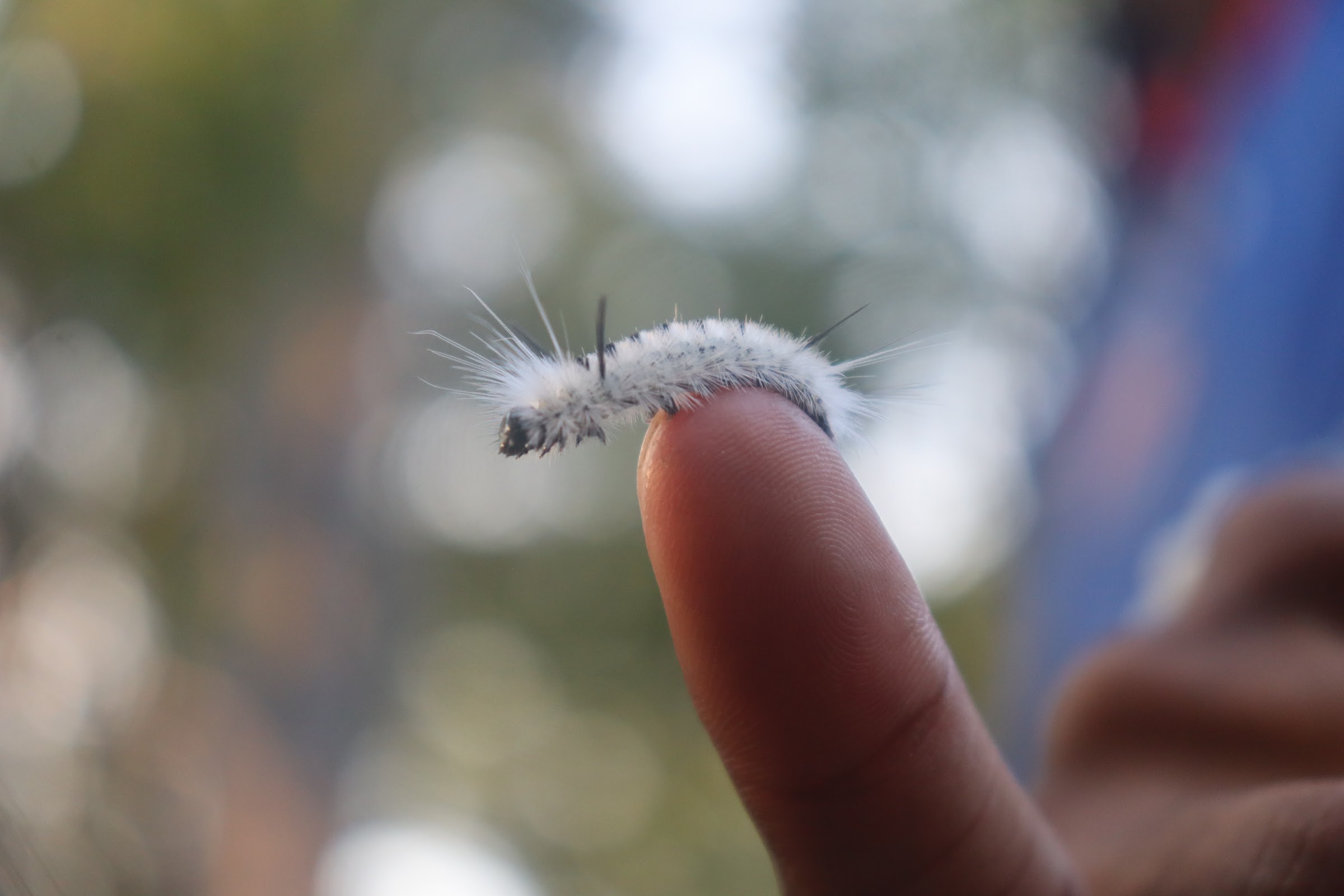



Hickory Tussock Moth by Sienna Goldburd, age 10
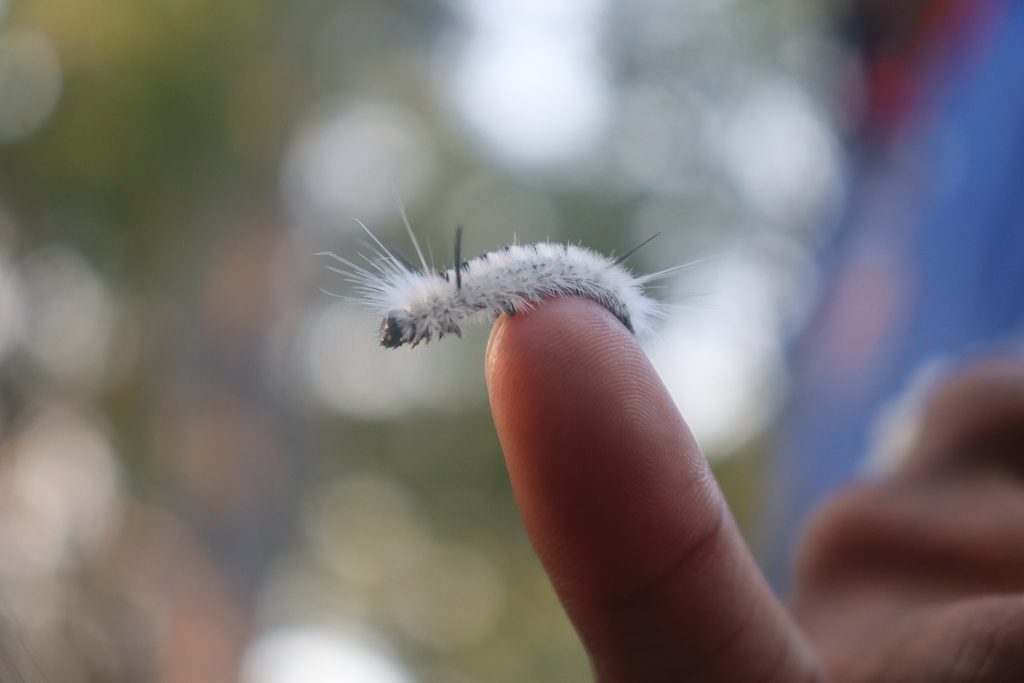
“I was working outside during a workshop when I looked down and saw one of those black and white caterpillars crawling toward me about an inch away from my leg,” Sofia K., Senior Camper, told The WriCampian in an email. “I jumped up and immediately warned my friends. We later saw two more!”
Recently there have been many sightings of a certain black-and-white fuzzy caterpillar around WriCampia. This caterpillar eventually becomes the Hickory Tussock moth otherwise known as the Lophocampa caryae (its scientific name), or the tiger moth. But my fellow campers call it the bird poop caterpillar because it disguises itself to look like bird poop so that birds don’t eat it.
The caterpillar is black with grayish white hair covering most of its body, and its moth form is light brown with white splotches all over its wings. It looks similar to, but is not to be confused with, the spongy moth Lymantria dispar.
Do not be fooled by this caterpillar’s cute looks! If you pick one up you will most likely incur a rash, as many campers have already learned the hard way. Even its cocoon can give you a rash, so be careful! This is due to its defense mechanism located in its barbed hairs also known as setae. Handling the hairs transfers them to your skin, sparking the reaction.
Dozens of other sightings were confirmed by, among others, Instructor Andie (while tossing a frisbee in the soccer field during Dailies), members of Lil’s workshop, and members of Vanessa’s workshop.
The bug eats a variety of hardwood leaves, but is recorded to like hickory, butternut, or walnut more than the others. The moth can be found all over the eastern half of North America. In the area there have been about 946 sightings in both caterpillar and moth form according to the ecology app iNaturalist. Its total global sightings on the app number in the tens of thousands.
It’s perfectly fine to look at them from afar, but remember, don’t touch them!
Weevil by Isla Bilson, age 11
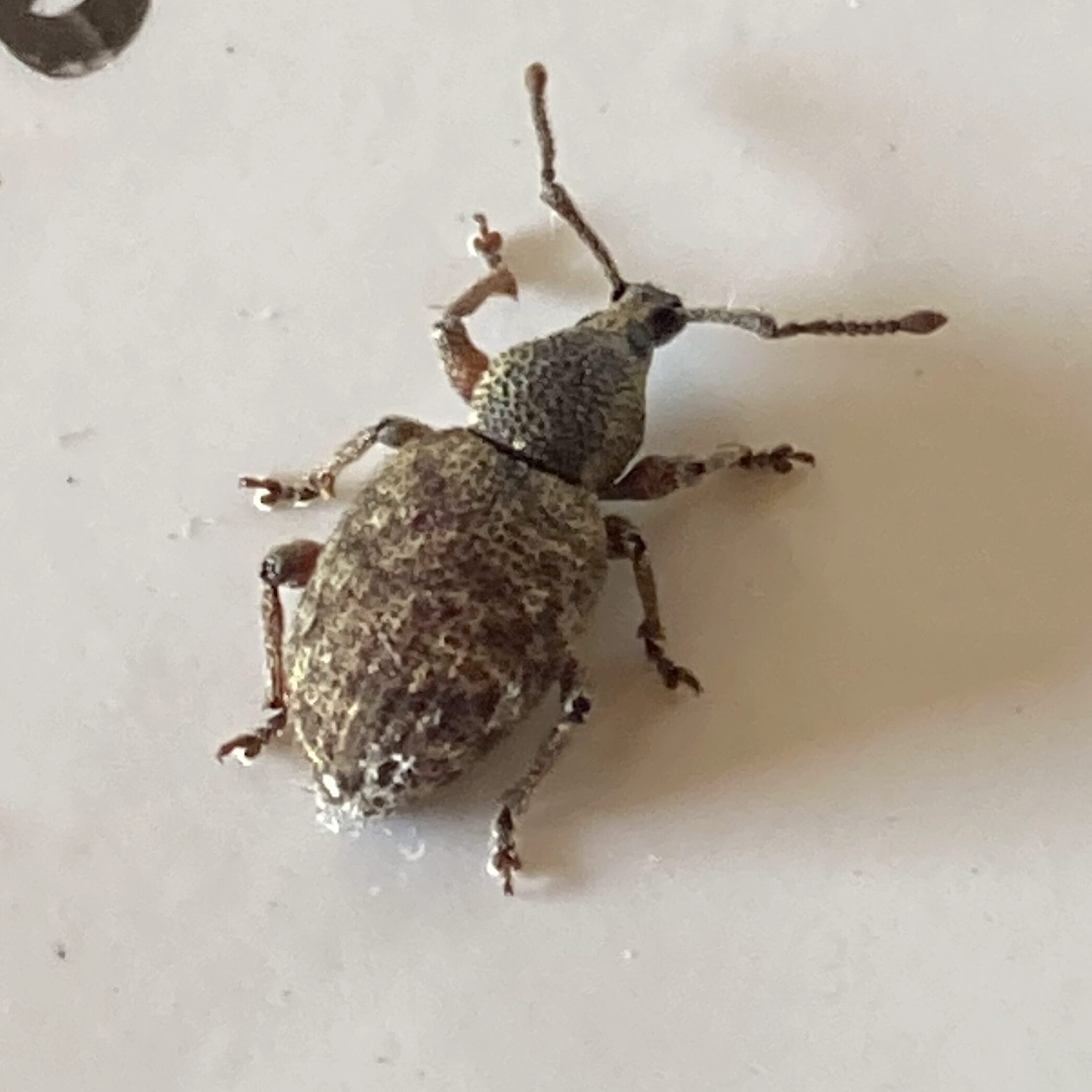
In the depths of WriCampia, there lay a weevil with a passion for art. On Wed., Aug. 12, a clay-colored weevil–also known as the Otiorhynchus singularis–was spotted on a sketchbook in the jewelry making house.
According to Ohio Line, clay-colored weevils are a species of weevil native to Europe, but they can also be found in North America, since international trade accidentally caused them to be imported from Europe. According to the website Nature Spot, weevils can often be a pest towards raspberry farmers, since they eat shrubs, and are mostly spotted in spring and summer. Clay-colored weevils are clay-brown and are typically around 8mm long (about 0.3 inches). According to the Extension UMaine website, they hatch from eggs laid nearby plants, and will borrow down to a depth of around 50cm (about 19-20 inches), where they then will feast on the roots of the plant. When they mature, they emerge from the ground as adults.
While weevils are a different species than us humans, it’s no wonder they still enjoy coming to an arts camp like the rest of us. Clearly, these weevils grow up at camp, just like us campers–only, just a little faster.
Vole by Sasha Mital, age 10
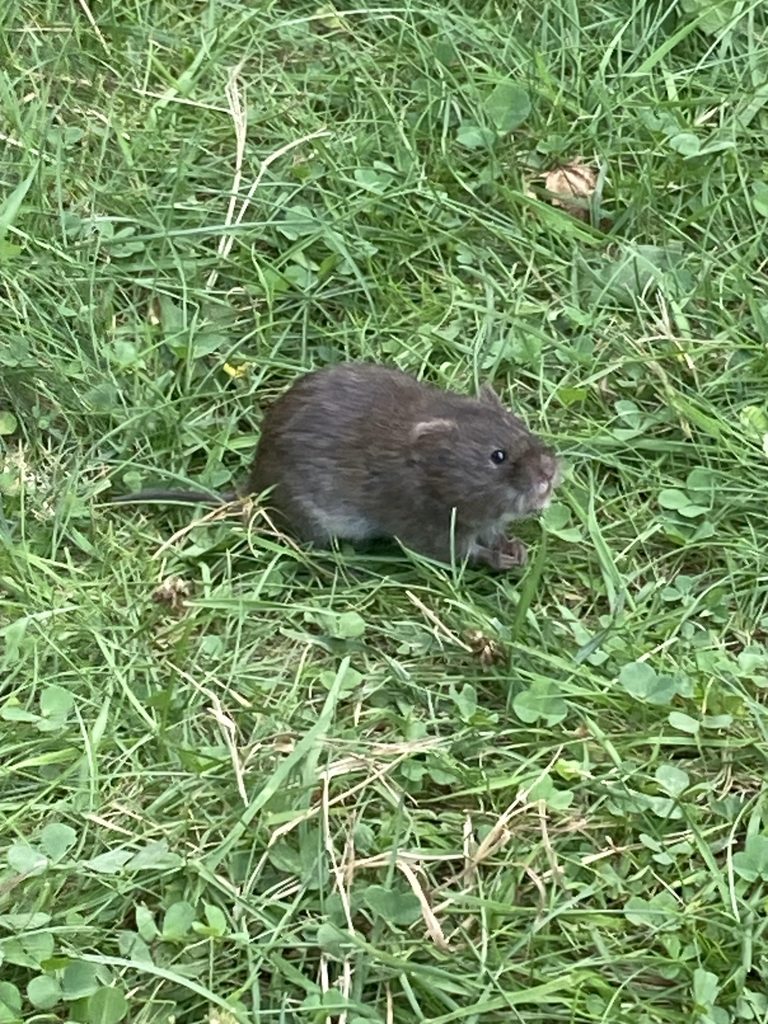
The Eastern Meadow Voles or Microtus pennsylvanicus is a type of rodent with a fluffy coat and short tail. Meadow voles live in and eat grass. They make little “runways” across the grass and even underground burrows when it becomes wintertime. They live in Canada and the United States. Meadow voles live in colonies of about 300 individuals. They have been spotted around camp by campers and counselors alike.
On Wednesday, Lil, an instructor, “felt a subtle weight on my right sneaker while standing at the water fountain between bunks 35 and 36, looked down, and it was there sniffing around with its little quivering nose. I saw it the day before also.” They added that it was uncommonly brave for it to crawl onto their shoe, and that they did not think it had rabies.
Senior Camper Ian W. also witnessed these rodents around Camp Danbee. “Today, I saw the second of two voles in two days,” he said. “It was pretty wild. Especially because you don’t see them in New York City,” where he lives. “It kept trying to touch our shoes.”
Despite how cute a vole can be, it’s a great rule of thumb to generally avoid disturbing wildlife. Unless, of course, it crawls onto your shoe.
Pickerel Frog by Maya Kronsberg, age 10
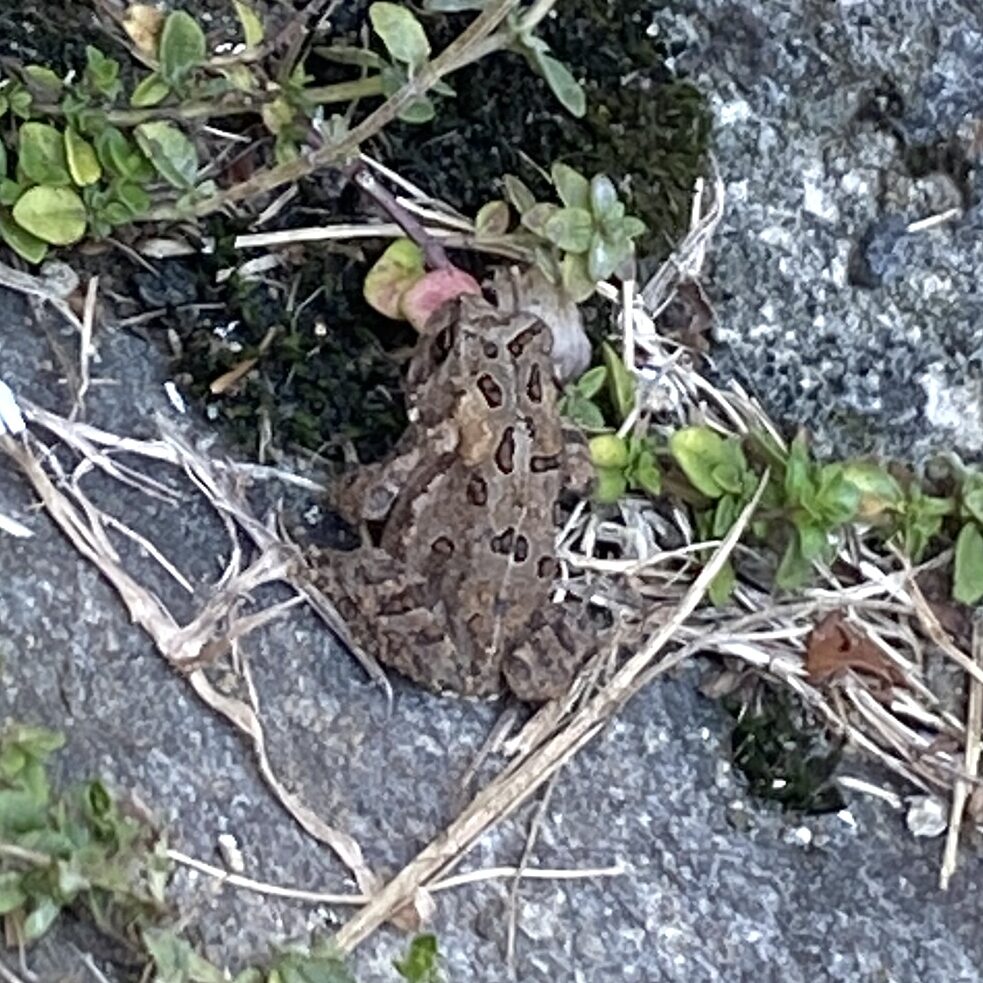
On Tuesday the 11th around 9:30 am, a Pickerel frog–-a frog so small it could be a miniature figurine–was spotted by a group of lower campers. The frog was spotted on the stone steps of the gymnastics building on the way to Harrison’s writing workshop.
These creatures are hidden all over WriCampia, blending in perfectly with their surroundings. Their backs are speckled with brown dots, coated over their tan skin. This makes them blend in perfectly against wood and tree bark. If you want to identify one yourself, the Audubon Society advises that you look out for their distinctive pattern in the forested areas of the East Coast of the US and the Southeastern parts of Canada.
The little critters may seem tiny, but they’re still pretty mighty. If you come anywhere near them, their instincts will kick in and they will hop away, almost like they have eyes on the backs of their heads. The Pickerel frogs like to feast on small bugs like ants, spiders and small beetles, like most other frogs do. Remember that they’re about the size of a thumb, so keep your eyes peeled to spot this magnificent creature.