


What happens to all of this uneaten food?
I pondered this question as I dumped my workshop’s tray of uneaten spaghetti into the compost bin, the tomato sauce splattering the layers of old food from earlier in the week.
Food waste is a major ethical and environmental issue. As the most common item that ends up in landfills, wasted food produces significant amounts of methane and squanders water and agricultural resources used to produce it—not to mention that this uneaten food could’ve been used to feed millions of hungry people.
According to USDA.gov, in the United States, 30-40% of food produced is ultimately wasted. Several factors contribute to this, including spoilage, over-ordering, and excessive portions.
At Camp Danbee, the dining hall’s main priority is ensuring they don’t run out of food. Zach, one of Camp Danbee’s directors, explained, “It’s really just a math game,” calculating how much food to order and serve so that each person gets one standard portion of every item for a given meal.
Danbee follows a tradition of “family style” meals, where workshops receive trays of food with the assumption that everyone will eat a standard portion size. Since the dining hall does not distinguish between tables with eight versus twelve people, or how much food a camper versus a staff member will eat, overestimation is common. The goal, though, is for people to come back for seconds rather than putting out large portions that go uneaten, Zach said.
When meals leave significant leftovers across several tables, like when the camp served meatball subs, the camp will rethink their methods. If hardly any food is taken from the tray, maybe they won’t serve that item as frequently. Perhaps in the future, the camp could take a step further to implement a feedback form where campers and staff share food item preferences and estimate which items they’d eat more or less of.
Yet given that food waste is largely inevitable at camp, Danbee has found a sustainable way to manage food that would otherwise end up in landfills: composting. This initiative began five years ago, shortly after the pandemic in 2021. That same year, Mary Summers founded Tommy’s Compost, a local Berkshire business transforming food waste from customers into nutrient-dense compost for local farms. So, twice a week, Mary, the business owner and driver, collects the compost at Camp Danbee and from 135 other customers, and delivers the food scraps to two farms where they are transformed into fertilizer.
Shortly after Danbee began composting, the state of Massachusetts expanded their 2014 policy banning the disposal of commercial organic wastes to include smaller-scale businesses/institutions like Danbee. While the ban initially applied only to businesses producing over a ton of food waste per week, as of Nov. 2022, that threshold has been lowered to half a ton.
Composting is “a great way to offset the waste,” Zach said. At the same time, he would like to reduce the amount of food composted in the first place.
That’s where WriCampians can help. For example, if a workshop’s table runs out of chicken tenders and a few campers are still hungry, “[they should] look to the table next to them to see if they have a few extra tenders,” Zach said. That way, they don’t need to waste a whole second tray. What doesn’t leave the counter can be repurposed into something new. Leftover chicken breast becomes a protein-rich salad topping. Uneaten elbow noodles from mac-and-cheese night may become the basis of a delicious pasta salad.
Yet repurposing leftovers isn’t always that simple. Zach explained that many foods that have already been heated for a meal cannot be reheated again to serve due to risks of foodborne bacteria. The priority is that “we aren’t sacrificing quality or getting people sick,” he said.
If there’s still food leftover, the WriCampia community should nonetheless pause and think about whether they’re disposing of the food in the compost or the trash and consider whether others might want to enjoy it, especially when it comes to dessert.
But too often dessert is not making it to the compost bin. On the first Thursday of camp, when walking back to Well-B-Yon, two members of my senior camp workshop shared that they spotted an uneaten birthday cake in the trash can.
All of us were appalled.
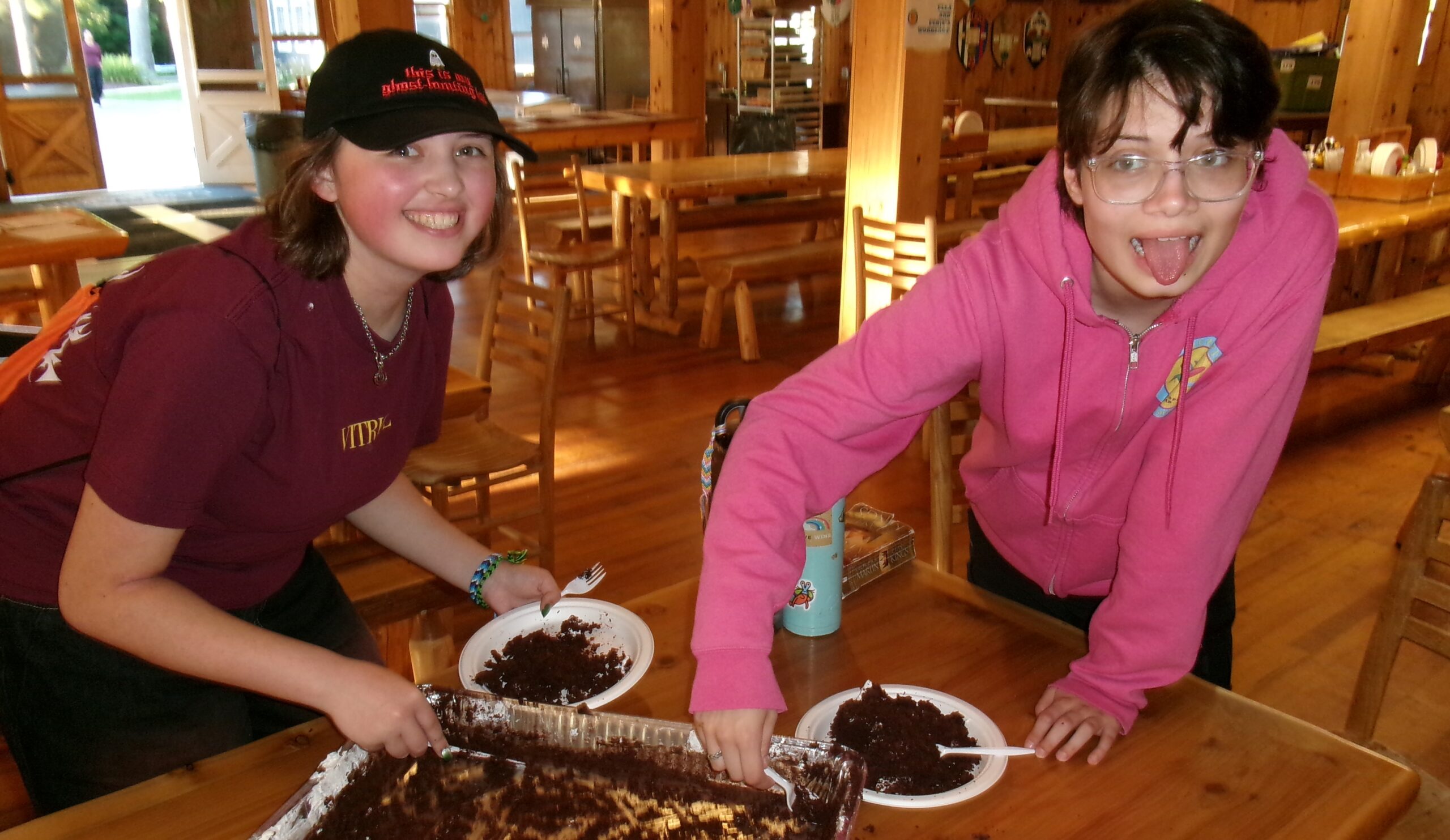
So two days later, when our workshop was celebrating a birthday with a massive chocolate cake, the mission became clear: none of it would be thrown away. We invited kids from our CIT bunks and random counselors and campers passing by to join in and enjoy a slice. By the end, everyone was cheering as Maya S. and Mabel F. scraped the pan, refusing to let a single crumb go to waste.