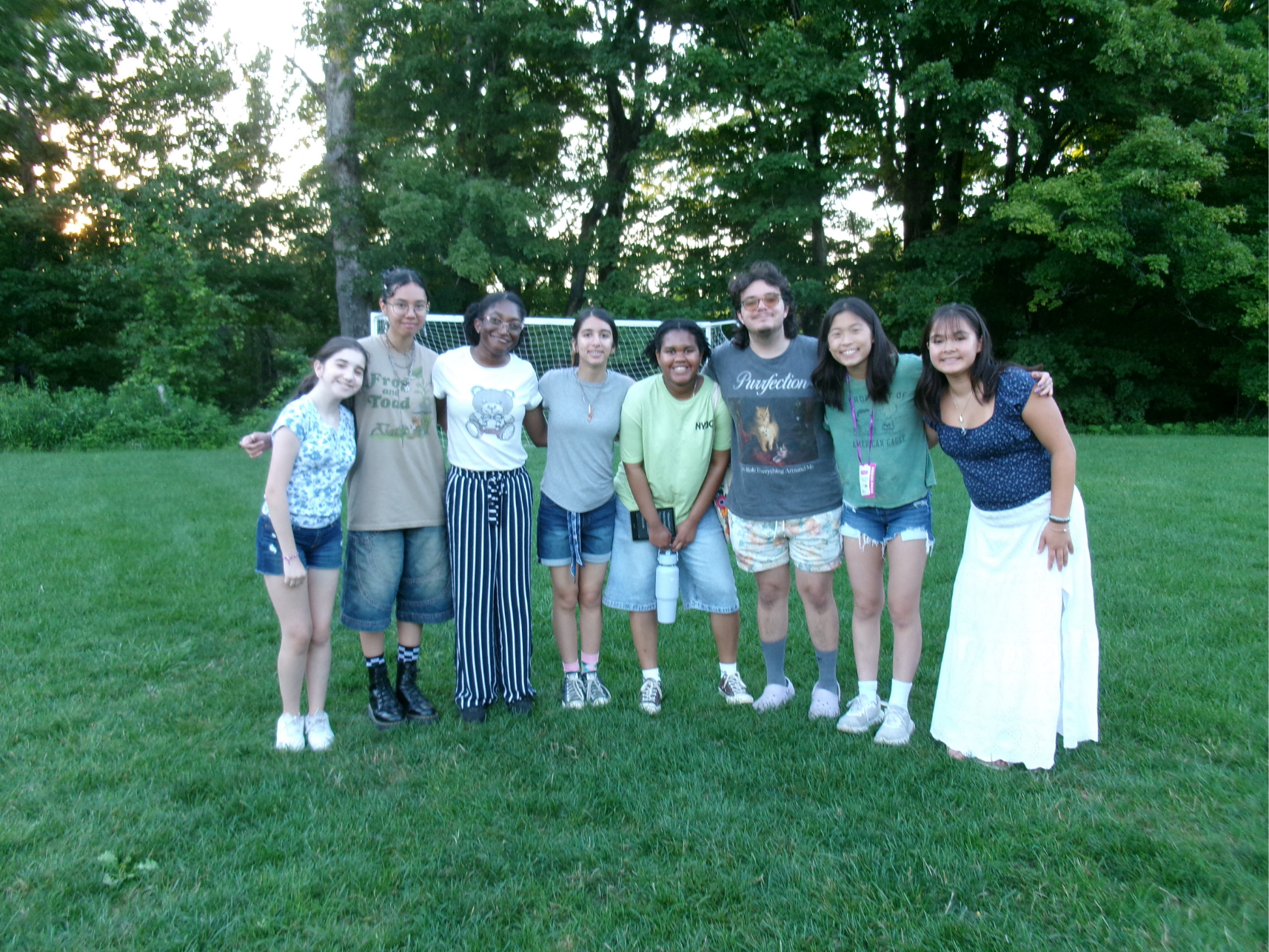



While the needle has barely shifted in terms of disability representation in books and movies, here at WriCampia, thanks to our beloved DDC affinity group, the late-night elective for campers with disabilities, dietary restrictions, and chronic illnesses, it seems to be moving faster.
After interviewing campers and staff to gauge their perception of disability through media they have consumed, there was a unanimous agreement that the lack of accurate disability representation or education in the media, whether consciously or not, has caused society to look through an ableist lens.
According to senior camper Siobhan B.D., “we exist in a misogynistic, racist, and ableist society that’s been built on those values, and the media will always reflect that to a certain degree.” Due to this, and the fact that the majority of current media is produced by non-disabled people, the language surrounding disability, both written and verbal, often has a negative connotation. For example, wheelchair-users are referred to as “wheelchair-bound,” when in reality, rather than restricting disabled people, mobility aids give them the opportunity to live a fulfilling life with fewer limits. Although DDC members emphasized that “disabled” and “disability” are not bad words, counselor Jaida believes that we may not have found the appropriate word for it yet. A few other members agreed, saying that “disabled’ does not encompass the diverse ways disabilities impact people. As such, the word itself can cause able-bodied people to make incorrect assumptions about those with disabilities.
Meanwhile, both Nico L and fellow middle camper Charlie expressed disappointment at the lack of educational media on disabilities, underscoring how DDC can play an important role in helping campers and staff learn about this minority group and strengthen their understanding of values such as diversity, respect, and equity that are a hallmark of WriCampia.
Several campers shared that they learned the most about disability through the book Out of My Mind by Sharon M. Draper. I decided to see what readers with disabilities had to say. Out of My Mind follows Melody, a tween with cerebral palsy who is a wheelchair user and non-verbal. While this book is based off the author’s experiences as a parent of a disabled child, many readers with disabilities criticize the author’s portrayal of Melody. These readers argue that, in an effort to avoid infantilizing her, Draper exoticized her by making her a genius. Many of the adults in Melody’s life push for her to receive accommodations due to the fact that she is “special” or “extraordinary,” which many reviewers see as placing her value or worth on her extreme intelligence rather than the fact that she is a human being with the right to communication and education. Some thought that those adults were trying to make up for Melody’s physical disabilities through showcasing her intellect in trivia competitions. There is no doubt that people with disabilities can have extreme intelligence that deserves recognition, or that Out of My Mind humanizes disability and touches the hearts of thousands of readers. But, it is also a strong example of how literature and other forms of media often rely on cliché tropes to depict disabilities—in this case with a kind of magical power—and resist creating more representative, fully developed characters with disabilities. (Other common tropes to avoid depict people with disabilities as being evil or docile. Common stereotypes depict wheelchair users being fully rather than partially immobile on their feet, people with Tourette’s always having coprolalia (shouting curses) rather than more minor tics, or blind people always wearing sunglasses.)
But when I found middle camper Nico L. scrapbooking on the art porch and asked her what words or phrases came to her mind when I said the word disability, without missing a beat, she replied: “WriCampia and DDC.” DDC has clearly helped members feel represented through seeing others like them both thriving and struggling in similar ways. It has given them comfort and hope and allowed their experiences to be seen and understood, benefiting the community at large.
Members of DDC expressed deep appreciation for accommodations provided by WriCampia, such as access to golf carts and diverse options in the dining hall. These accommodations reinforce the idea that WriCampia is a safe space for everyone—one where campers and staff understand that, as camper Siobhan B. D. said, “people with disabilities not only exist but deserve attention.”